Grab your digital copy of Veteran for 99c during the month of November. Enjoy the second in the City Streets series at this special price at digital booksellers. For more info about Veteran—reviews, first chapter, character info —see past posts.


Mystery Novels
Grab your digital copy of Veteran for 99c during the month of November. Enjoy the second in the City Streets series at this special price at digital booksellers. For more info about Veteran—reviews, first chapter, character info —see past posts.
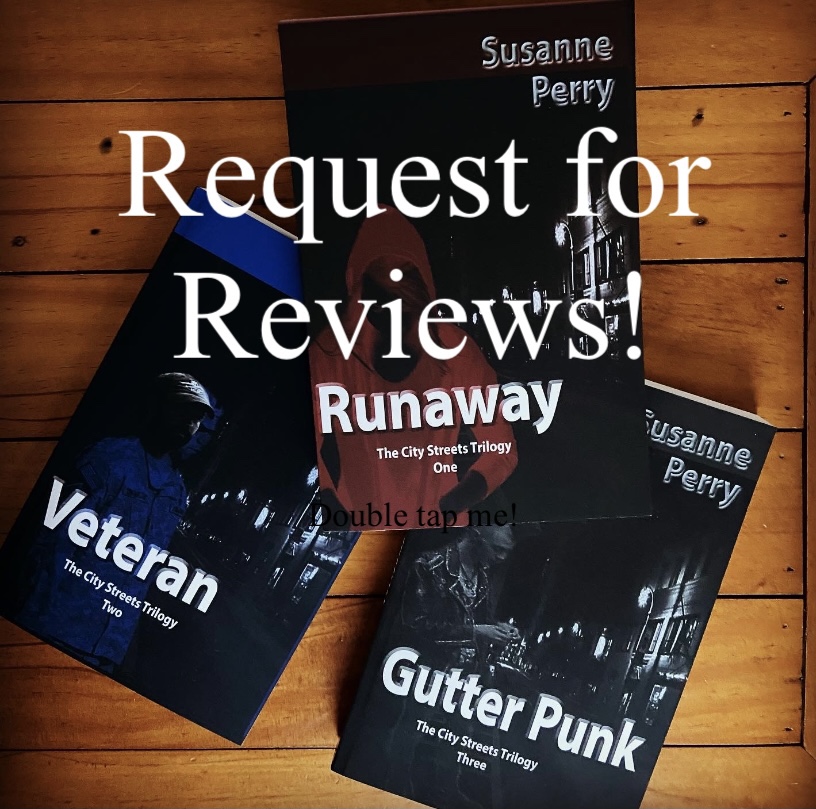
If you’ve read one (or more!) of the novels in the City Streets series, please take a moment and post a brief review on Amazon, Goodreads, Facebook, other online book pages or social media platforms—and I would love reading your comments below.
Reviews give Indie authors the best marketing exposure — most of which we scramble to do ourselves. Ratings without a written review take mere seconds to post and are helpful as well.
“Runaway” is 99c for a digital copy on Amazon, B/N Nook, AppleBooks & Kobo. I’ll be offering “Veteran” at a special e-book price in November.
Thank you so much in advance. Happy Reading!
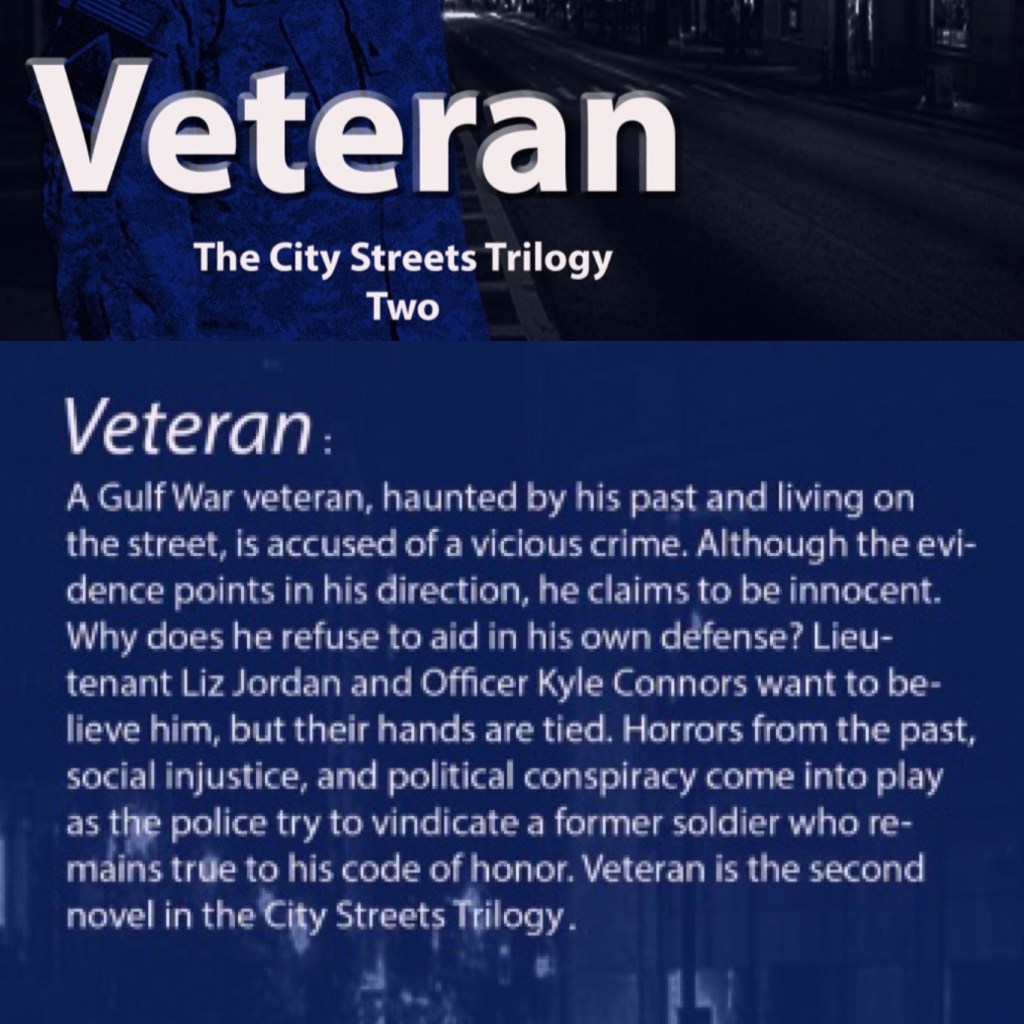
It will soon be November. Spotlighting “Veteran” today. I have a special love and respect for Ty, the titular character of Book Two. He’s like a brother to me, a guy I could have known in school. As I outlined the first draft, friends who had been in combat shared with me some of their experiences. They had not spoken much about it before and I was honored to hear what they had to say. I hope Ty and I have done justice to the memories.
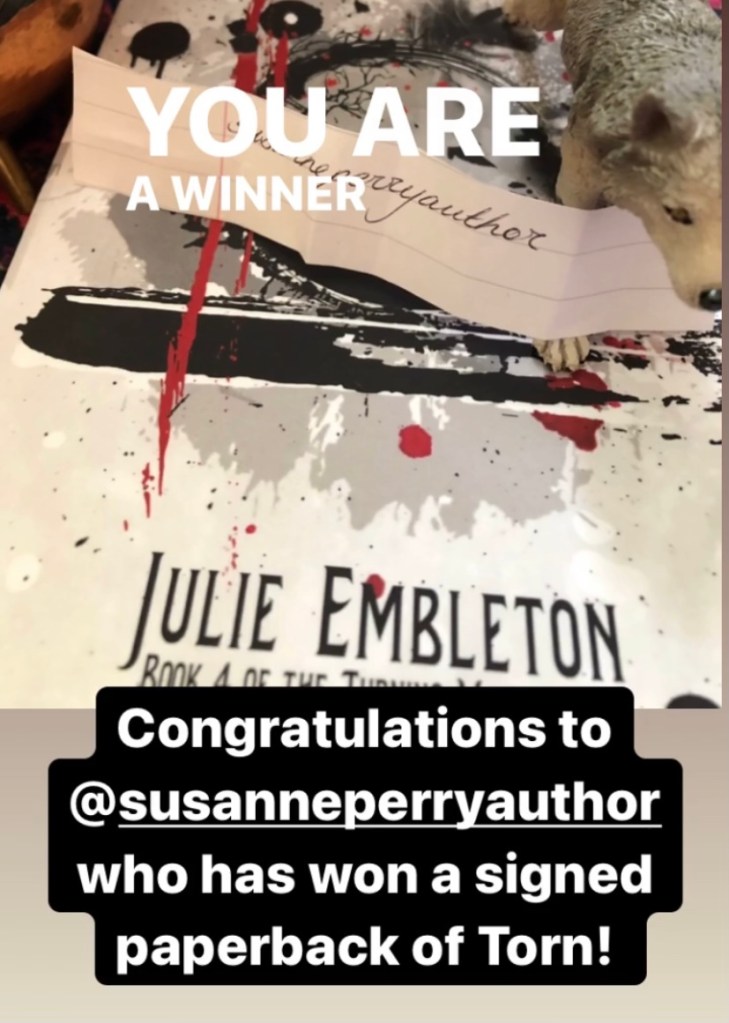
Julie Embleton is from Ireland and is a fellow author on Instagram. We connected within the wide-reaching and supportive writer’s community on the platform. Julie is the host behind the weekly effort, Self Promote Sunday for Indie authors.
I entered a drawing recently for a paperback copy of her new novel, Torn. Guess what? I won! This is the fourth in a series and I’m looking forward to reading it. Funny side note is that earlier in October, I held a giveaway drawing for ebooks and Julie was a winner. She chose a digital copy of Runaway.
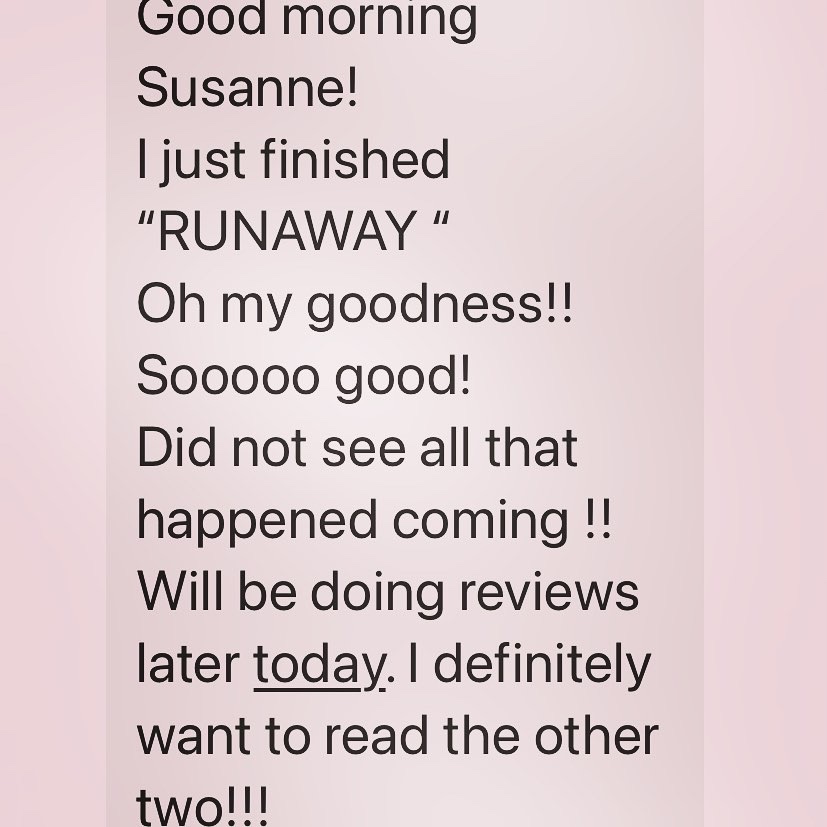
It’s always nice to receive messages from readers, especially to help celebrate Runaway’s Book Birthday on October 1st.
Download Runaway for 99c on Amazon or AppleBooks. Softcover $12 on Amazon or order from any bookseller. Visit my purchase page here for autographed copies.

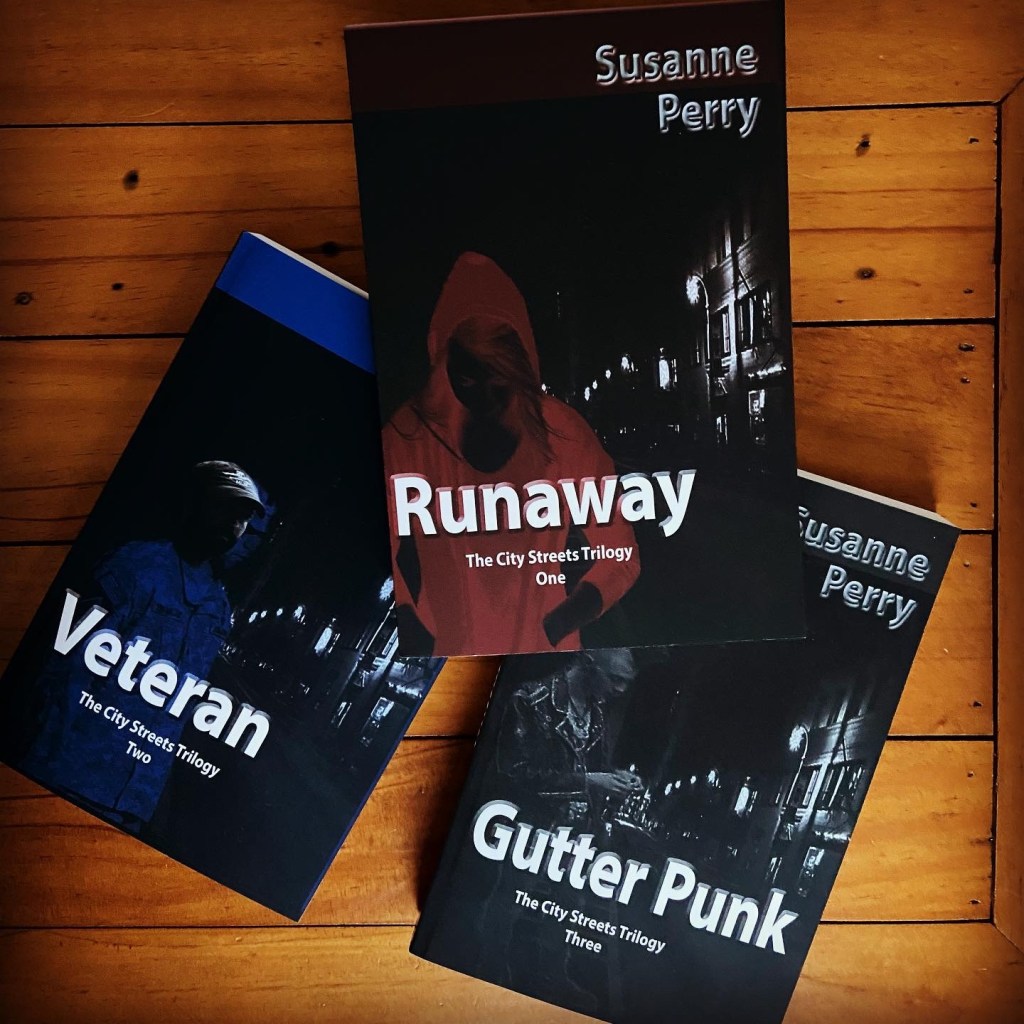
I’m giving away THREE ebooks — one each of Runaway, Veteran and Gutter Punk!
LIKE this post and comment which of the three you’d like to win.
Plus—Score an extra entry by forwarding the link to this webpage to a mystery-loving friend.
Winners will be drawn on Sept 30 & notified by email. E-books will be emailed to winners as Mobi, e-Pub or pdf.
Good Luck & Happy Reading!
Finally, the day had arrived. After forty years of smart-ass students, irrational parents, inept administrators and clueless coworkers, it was my last day in this godforsaken classroom. When I became a teacher all those years ago, it wasn’t to have the summers off as some asshole idiot will tell you, thinking he’s so clever. Yeah. Ha-ha.
In truth, my motivation was a love of history. I became a history teacher because history was all I wanted to talk about, all I wanted to read about. I needed a job after college and I wanted to be involved with something I felt passionate about. But right now, I’m tired and I don’t remember feeling passionate about anything.
There would be the obligatory send off in the faculty lunch room with the usual lame cards and comments. We’re gonna miss you around here, man. Sure. Right. These clowns will miss me until the moment they raid the shelves in my vacant classroom of supplies, like victors of war reaping the spoils. My fellow teachers aren’t gonna miss me any more than I will miss them. Good riddance.
If history taught me anything, and it most definitely has taught me much, it’s that people can find immeasurable reserves of strength at times when it’s most needed. I could offer points of discussion, but I won’t bore you. I’m retiring. My days of boring people with history are coming to an end and the only immeasurable strength I can relate to is that I showed up to work every day in these last few miserable years.
History, or more correctly, social observation also taught me is that when one is of a certain age, one should move aside and let another take the wheel before you become a jaded, ugly caricature of yourself. Unfortunately, we aren’t aware of that beast nipping at our heels until it’s too late.
As a new teacher, I went home each day covered in chalk dust and excited about classroom discussions. Debates about the Revolutionary War, the Industrial Revolution, the Louisiana Purchase, admission of states to the union—all topics that excited me and it was gratifying to see them excite my students. It didn’t last. Chalk dust was eliminated by a lap top and projector. I didn’t miss the chalk dust.
Glancing around the room that I had occupied for most of my career depressed me. The room was absent of any vestige of my influence. Forty damned years and you would have thought I’d never been there. I turned and walked out with one last box of crap that I would probably stick in the garage at home and never look at again.
I walked to the teacher parking lot, placed the box in the bed of my truck and turned back to the building. Knowing what awaited me in the staff room, I was tempted to get in my truck and leave, but even I’m not that big of an asshole. And I’d be damned if I’d let them say that I was.
Trudging back into the building, I walked down the corridor and into the staff room. The room was filled with teaching staff and administrators, most of whom I recognized. I wasn’t the only poor sucker heading out the door for good. It didn’t surprise me that people I didn’t know would be in attendance.
I was only a step inside the room when Carlson, the vice principal, saw me, raised his arms in mock surprise then clapped his hands together as a signal. “All right, everyone! It’s one of our esteemed guests.” Carlson’s announcement was met with applause and hands reached out to shake mine. I felt the light slap of palms against my back and shoulders. There was an odd quality to Carlson that made me wonder if he was angling for a promotion.
I studied Carlson a moment longer as someone handed me a plastic cup of something. I took a sip. Not bad. I could choke down one drink, endure the bullshit for a while and get the hell out of here. I watched Carlson. He was much too motivated for the last day of the school year. Most of us were too exhausted at this point to give a shit. What a putz.
Carlson stepped over to me and raised his hand to get everyone’s attention. With his hand on my shoulder, he said a few things about me, my dedication, the impact we all hoped to have on students. Blah, blah. I wasn’t really listening. He was talking about someone I didn’t know anymore, someone I used to be.
As Carlson finished speaking and the crowd joined him in applause one more time, he placed a large envelope in my hands. The envelope was not heavy, but full of papers and such. Cards and notes from colleagues, I assumed. Carlson leaned over and said, “For later, when you have more time.”
I endured a few brief, mind-numbing conversations, confirming how uninterested I was in being there. These younger teachers were much too excited and it was giving me a headache. I sipped my drink and looked around for anyone around my age with whom I could stomach a few minutes of small talk. Greenwood, who was retiring from teaching English, was near the door. He turned in my direction, but didn’t see me through the crowd. Before I could step in that direction, Greenwood was gone.
Staring into the plastic cup for a few seconds, I saw that it was empty. When had I finished my drink? No matter, I thought. I’d pour myself a real drink at home. I dropped the cup into the waste basket. I shook a couple of hands as I made my way to the door, the envelope from Carlson under my arm, and walked out. Freedom.
My truck was parked next to Greenwood’s small hybrid. The front ends of both vehicles were facing in my direction and Greenwood was sitting behind his steering wheel. As I approached, I lifted my hand in greeting and walked closer. Greenwood hesitated, but then stuck his hand out of the driver’s side window and shook my hand.
“Hey, Greenwood,” I said. “We’re both out of here. We’ve made it out the other side.”
Greenwood nodded. “How many years for you?” he asked. “I’ve lost count.”
“Forty,” I answered. “You were here when I started. How many for you?”
“Forty-five,” answered Greenwood. “I remember your first day. You were full of new ideas and so motivated,” he said, pointing his finger at me. “You were an encouragement to many of us who had already begun to lose our grip. You reminded us that it was about the kids. We had forgotten that. At least I had. I never forgot it again.”
I looked at Greenwood. If I hadn’t known better I could have sworn there were tears in his eyes. I was embarrassed by his words, but managed to acknowledge the sentiment with a nod and a thank you.
“Did you?” he asked.
“Did I what?” I asked him. I was confused and must have looked it.
Greenwood shook his head. “Nothing. Just thinking of the old saying, ‘Those who cannot remember the past are doomed to repeat it.’ Do you remember the saying?”
“Of course. Santayana, am I correct?”
“It’s been attributed to him, yes.” He smiled with tears in his eyes. Greenwood wiped his face with his hand and said, “Glad to have a chance to wish you the best.”
“Same to you, Greenwood.” I rapped a knuckle on his car door as a goodbye. He backed out and drove away.
I watched the hybrid drive off, offering one last wave and ambled over to my truck. As I sat down in the front seat, I placed Carlson’s envelope on the passenger seat, and rested my hands on the steering wheel. I looked at the envelope and considered looking through a few of the notes, but decided they would keep. I glanced over at the doorway to the building, I had not seen another faculty member leave the party. How they could stand hanging out this long was beyond me.
The events of the day caught up with me and fatigue set in. I wasn’t a young person any longer and was tired after a full day of teaching. But I had to admit to myself that I was exhausted. Totally wiped out. I took a deep breath and decided to rest for a few minutes, a quick detox to rid my system of the day.
I woke with a jolt, dazed and disoriented, not realizing that I’d dozed off. The vehicle I sat in was not my own. Wait, yes it was…well, it had been at one time. It took a few moments for me to place the dashboard of the Chevy, the car I drove in college. I took a deep breath. I was dreaming, that was all.
The building itself had changed. The entrance was different. The double door was a deeper color, a color I recognized but hadn’t seen in ages. The sun angle told me it was early in the morning. I watched people heading into the building, instead of coming out. This was bullshit. If I wasn’t dreaming, I was in shock caused by the major life change of beginning my retirement. Or someone slipped me a mickey. What a shitty prank to pull.
I saw the envelope sitting on the seat next to me and reached for it. Opening the flap, I removed a handful of papers. Then I looked at my palms and saw traces of chalk dust. I wiped them on my jacket, a jacket I hadn’t worn in decades. The top sheet of paper was a schedule of meetings. The schedule was headed by a welcome to the new school year. A special welcome was extended to new teachers and my name was listed. The schedule was dated early September forty years prior. I looked in the rear view mirror and gasped as my younger self stared back.
With a shaky hand, I opened the door and stepped out of the Chevy. Nausea hit and I broke out in a sweat when I saw Cummings, the principal who hired me to teach history. He was standing at the entrance to the building. Cummings saw me and waved me over. The man had been dead for over twenty years. Damn. I should have listened to Greenwood and Santayana and got the hell out of here while I had the chance.
It was 1975 and my hippie sister was getting married. Our parents thought it was wonderful, but mind you, my sister and her boyfriend were not exactly invested in tradition. I thought she’d lost her mind. As I saw it, she had the perfect life at college. I imagined parties until all hours and awesome concerts. Classes, sulky professors and living on a shoestring didn’t factor into my vision of her life.
The wedding would be small, out of doors. I would serve as bridesmaid, my sister’s best friend as the maid of honor. My mother would make our dresses for the event: floor-length, empire waist, spaghetti straps. In keeping with the times and the warm summer temperatures, we’d have flowers in our long, straight hair and sandals on our feet. The dresses would be lovely for a late summer wedding and I’d be able to wear the dress on another occasion. In my selfish, teenaged mind, that was the most important feature.
This was the summer before my junior year of high school. I worked on a suntan in the rare Pacific Northwest sunshine, listened to rock music with friends, and snuck an occasional cigarette that I rarely enjoyed but it was cool to pretend. I had no plans for my future beyond completing the driver education course and getting the coveted license to drive a car. Beyond that, I hung out with girlfriends, all of whom wanted to spend their time enjoying the company of cute, long-haired teenaged guys who drove loud cars and were always looking for a party.
Sprawled on my sister’s bed, I stared at the ceiling while she jotted endless notes. “Why are you doing this?” I asked. “It’s out of character for both of you.” She looked at me with her usual older-sister haughtiness then rolled her eyes.
“We’ve simply decided. You should be happy for us and enjoy the experience. If anyone should ask,” she added, “I’m not pregnant nor am I quitting school. And try to be helpful,” she said.
“Whatever,” I said as I left the room. There would be no further response because we did not share intimate snippets. If I shared with my older sister the private details of my life, I would be met with obvious disdain and at sixteen, my self-disdain was enough.
I flopped onto my own bed, face up to the ceiling once again. My thoughts left my sister and I began to muse on the party I planned to attend later on, up in the woods near the river. These parties were always the best; no one for miles around bothered by our music, our noise or our fun.
There was a knock on my door and my mother entered. “I know you have plans later, but I need a favor,” she said. She closed the door and sat on the bed. “Your grandmother,” she explained, “is anxious about the quilt she’s making as a wedding gift. She needs help measuring and cutting, simple tasks like that. I have errands to run and I’m accompanying the choir at five p.m. I’ll make it up to you,” she assured me.
I felt myself slump which is hard to do when you’re lying down. For all my faults, I rarely argued with my mother. She didn’t ask that much of me. My mother didn’t work outside of our home, but she played the piano. Actually, she was an accomplished musician whose talent was relegated to the occasional wedding or community event. And she took care of my grandmother.
My father’s mother lived with my family, but I didn’t enjoy her company. My grandmother wasn’t mean or difficult, but she conveyed an attitude of indifference. She had had a difficult life. Her husband, my grandfather whom I never met, was reportedly an angry man with a sour nature and she had retreated into herself and her sad past. As far as I knew, my grandmother had two pleasures in life: she smoked cigarettes like a house on fire and she was an avid quilter.
Grandma’s large bedroom had a view of our backyard. She spent hours alone in that room making quilts. Quilting wasn’t my thing. I brooded about the assignment then dragged myself downstairs.
I approached my grandmother’s open bedroom door, hearing her faintly humming a tune I didn’t recognize. I knocked on the doorframe, glancing in her direction with a civil expression. She was surrounded by bundles of fabric and taking more out of a box. The humming ceased as she looked up and waved me in.
“I’m looking for fabrics I’ve saved, but I’m not finding them,” she explained.
“Are you sure they were in that box?” I asked. No answer as she delved deeper. She pulled out a small bag and looked inside.
“Here they are,” she said. She pulled out rolled remnants secured with rubber bands. I recognized one of the patterns. My sister had a peasant blouse made from it which I wanted to borrow although it was too big for me in the shoulders. The shades of blue had complimented her dark hair.
“I remember that blouse,” I said. “It was one of her favorites.” My grandmother nodded, set the remnant aside and pulled out another; blue with green polka dots. “I remember that, too,” I mentioned. My sister had had an Easter dress made from the fabric in sixth grade. She had argued with my mother over the length of the hem. My sister had won the skirmish.
As she began to pull a few other remnants from the bag, I could see that they were all saved from garments or items made for my sister. “You’re using fabrics she’ll remember to make the quilt,” I stated. “She’ll like that.”
My grandmother nodded again. She held up dark blue cotton with tiny white flowers. “You won’t remember this one,” she said. “You were still a baby. She wanted a pleated skirt for first day of kindergarten. We chose it together.”
“Nice,” I answered, a bit confused. My sister had not shared any more affection with my grandmother than I had. Weird. I felt left out, as though I had missed an event because I wasn’t invited.
“These three patterns will do,” she said, “and I’ll need three others. Help me decide which.”
“I like these,” I answered, as I suggested the deep-green paisley that I remembered from a jumper and a pale blue denim. The last fabric was a calico print.
“These will work well,” my grandmother said. “We’ll use solid green, blue, and yellow for borders.”
I became intrigued by her plan. “What do you want me to do?” I asked. Grandma explained that she would create twelve squares, eighteen inches on each side, constructed in a modified pinwheel arrangement. The pinwheel had been her great-grandmother’s signature pattern.
My grandmother’s expertise and precision were impressive. She was truly in her element. This was a side of her I had not seen. She handed me a right-angle tool to measure six-inch squares of fabric with one-inch allowance for seams. “Use these fabric scissors to cut exact squares,” she instructed. I listened wide-eyed.
“Are you sure I can do it correctly? I asked.
“Of course, you can,” she answered. “Keep the fabric flat, don’t pull it, and mark before you cut. Do the math first to know how many squares of each fabric.”
I calculated aloud. “Nine small squares per finished square. Nine times twelve finished squares is one hundred and eight. Six fabrics, so 108 divided by six is eighteen squares of each.”
“Exactly,” Grandma confirmed. “You’ve always been good at math.” I was a little embarrassed by the compliment, but she was correct in that math was my best subject. I was just surprised that she knew it. “Which color for the backing?” she asked. “There’s plenty of blue and green, not so much yellow.”
“Definitely green,” I answered.
“Okay,” she said, nodding agreement. “Let’s get started.”
I had expected the tedium to drag me to utter boredom, but I enjoyed the repetition. Soon, I was a few dozen squares into it. Grandma showed me how to stack them so I could count at a quick glance.We worked together in silence.
“What do you think of them getting married,” she asked. “Do you like him?”
“Sure,” I said. “He’s a nice guy.” She nodded. She had responded with a nod a few times.
“Why do you think he’s nice?” she asked me.
“He’s cool,” I answered. “They get along. He listens when she talks and he doesn’t try to talk her into anything,” I said. “That really turns me off,” I added with a shake of my head. “That means I really don’t like it.” It sounded like I was interpreting another language. She looked at me with half of a smile and said she had figured that much out.
“He’s nice to me,” she said. “But I didn’t know if his manners were for show, like Eddie Haskell on Leave it to Beaver.” We shared a laugh. I wasn’t sure if I had shared a laugh with her before and it had been natural, unforced. “I had hoped the kindness and the manners were real,” she said.
My grandmother hoped they would wait to start a family after they finished college. I realized that when she was my sister’s age, the choice of when to start a family was a decision seldom left to a young woman. I wondered if she knew that times had changed. It sounded like she hoped they had.
We continued working. I measured and cut. My grandmother created triangles made of joined squares, cut diagonally. Every few minutes she would count and measure.
When I had cut several dozen squares, Grandma said, “You can stop working if you’re tired.” I was enjoying myself. I didn’t want to quit.
“No,” I said. “I’d like to keep working.”
“This is a big help to me,” she said. “Scissoring is hard with my arthritis,” she explained. “How about getting us something to drink?” she suggested. “I would love a glass of tea.”
I returned from the kitchen with sweet tea for my grandmother and a Coke for me. She had two pinwheel-pattern squares, exactly the same, set out on her work table. The pattern was impressive, the colors vibrant. The combinations she had chosen were beautiful together. “Wow,” I said. “They’re so cool.”
Grandma smiled at me and nodded. “Yes,” she said, “I think so, too. They are cool, aren’t they?” she agreed, using my word. We sipped and worked. “I see you with friends,” my grandmother said. “So, if you don’t mind me asking, is there anyone special?”
“No,” I said, “and I don’t mind. There’s not anyone special. Just friends,” I told her.
“These boys that are friends, are they nice boys?” she asked.
“Yes,” I answered, laughing. “If they weren’t nice, we wouldn’t hang out with them.” She smiled and nodded. Another smile. Another nod of her head.
“Get to know them. Don’t rush anything,” she advised.
We had been focused for quite some time on the prep work when there was a knock on my grandmother’s bedroom door. It was my father. I couldn’t believe that it was time for him to be home.
“How are you two doing?” he asked.
“Fine,” Grandma answered. “We will join you for dinner soon,” she promised.
We sat at the kitchen table together, the three of us. The back door was open. The waning sunlight warmed the evening. My father talked with his mother and their ease together was touching.
The phone rang. “I’ll get it,” I told them, as I ran to the hall table where the rotary telephone had been sitting for as long as I could remember.
“Hey,” my friend said when I answered. “Still on for tonight?” she asked.
“I don’t know,” I told her as I looked towards the kitchen. “There’s a bunch of stuff going on. Wedding shit. I’m trying to act interested,” I said. I wanted to meet up with my friends, but I was enjoying the quilt project. I just wasn’t ready to confess it.
She sighed and said, “Okay, whatever. Call if you can make it. I’d much rather go with you.”
“Okay. Later,” I said and placed the receiver on the cradle. I told myself that another hour with Grandma and I’d be done. I’d make it to the party after all.
When we finished, Grandma started to clear the table. “Let me do that,” said my dad, still seated.
“Thank you, dear,” she told him. She patted his arm as he lit a cigarette. “That stew was delicious. She does such a good stew,” she said, referring to my mom. Grandma looked at me. “Are you still with me or do you need to leave?” she asked.
“There’s nothing going on,” I said.
She nodded and looked at my father, then at me. “You’ve been a big help,” she told me. “I’m beginning to think we may finish it.” My father nodded and smoked his cigarette.
Grandma went to the backyard for a cigarette of her own. She rarely smoked in our house, only in dead of winter and never in her bedroom. “How come you don’t smoke in here?” I asked when she returned. “It’s your room. Mom and Dad won’t care.”
“Years ago, a buyer mentioned to me that his quilt had a cigarette odor and they were allergic. Some of my quilts go to babies. Others go to elderly folks in rest homes. It would be a waste if someone couldn’t use them. That’s why I make them.”
“That’s nice of you,” I said. It really was.
“I didn’t smoke inside when your father was a child and I had my own home.” My grandmother paused and I glanced in her direction. With brows slightly raised behind glasses, she added, “And your grandfather didn’t like me to smoke.”
After a few minutes, I said, “I don’t remember my grandfather. I’ve seen pictures, but not many.” There were several family photos in my grandmother’s bedroom, but none of her husband. I thought of the picture from my parents’ wedding day that sat on my mother’s bedside table.
My grandmother looked at me over her glasses. She inhaled, sighed and I felt tension. Then she smiled and said, “You can stop whenever you want. You have helped so much.”
Trying to sound cheerful, I said, “I can keep going for a while longer.”
“I don’t want to keep you,” she said.
We worked quietly. When we shared conversation, it was about the quilt. I counted the dozens of squares and realized I had met the required number. It seemed impossible that I had reached the goal, but I looked at the clock and saw the time. We had been at it for hours with only a short break or two.
“I think I’m finished,” I said. My grandmother counted softly to herself and confirmed that I was correct. It had all caught up to me and I suddenly felt exhausted. I yawned, unable to hold it back.
“You should be tired,” she said, “You’ve done a lot of work.”
“The quilt will be beautiful,” I told her. “They will love it.”
My grandmother stepped over to her dressing table, opened a drawer and removed a small item. It was a pair of picture frames, hinged together. She handed them to me. “This is a picture of your grandfather as a young man. It’s the only picture I’ve kept of him,” she said. “The other picture is of me.”
The photo was of a handsome young man wearing a jacket and tie with a beautiful smile and big, dark eyes. He looked happy, laughing as if someone told a joke. He had his whole life ahead of him, excited for it to unfold. I looked at the photo of my grandmother. I could see traces of her. Fair waves of hair pinned back from her face. Traces of makeup and dark lips curved in a big smile.
I had heard little of the man who had raised my dad. I thought about the tension when memories of him had entered the conversation. I blurted out the statement that I’d not seen pictures of him before I realized there were no photos of him on display. I looked up and saw that my grandmother had returned to her chair. Stumbling on words, I managed to ask, “How old were you here?”
“The portraits were taken the year before we were married,” she said. “He wasn’t a happy person as he grew older. Maybe the responsibilities of having a family, maybe something deeper, I never knew. He saw his life as a disappointment. Whatever it was that made him bitter, he took it out on me. Mostly, he ignored your father.”
I handed the photographs to her. She looked at the picture of the young man she had married. “These were happier times. You never know how things will turn out,” she said.
“That’s sad,” I remarked. “What about my dad, Grandma. Did you worry about my parents before they married?”
My grandmother looked at me and tried to smile. “No,” she answered. “Your dad has always been a sweet person, from the time he was little. And I thought the world of your mom.”
“I guess things turned out okay for them,” I said, not really qualified to pass judgement on my parents’ relationship.
My grandmother smiled and said, “You’d better get to bed. It’s late.” I agreed and said goodnight.
As I passed the living room I saw my parents sitting together watching television, the same as most evenings. They looked up as I came into view.
“Goodnight, honey,” said my dad. “Sweet dreams.”
“Nice job helping out,” said my mom with a wink. “Sleep well.”
I wished them a goodnight and headed upstairs.
My bedroom window was open and I listened to the quiet sounds of the neighborhood that wafted in on the breeze. My thoughts and emotions swirled. My grandmother had shared her love of quilting. Also, she had warned about pain, sadness and choices. I felt her love and concern for my sister. I felt it for me.
My sister’s wedding was lovely. As they pulled the quilt from the wrappings, my sister read the card aloud with tears in her eyes. My grandmother had signed the card from the two of us.
Liz the cop, my MC in all three City Streets novels, has cats named for Eddie Vedder and the late Kurt Cobain, but I love the pooches so we needed a dog. Zeke, whose full name is Ezekiel, is Sage’s faithful companion. Sage and Ezekiel live on the street where Sage, a competent musician, busks to support them. Sage takes better care of Zeke than he does of himself and Zeke is a force to deal with in a pinch when danger comes too close. Read more in Gutter Punk, Book Three. You’ll find the first chapter in a previous post.

 Susanne Perry Publishing